
Reading a Bali spa menu is easier once you know what the main treatment names, durations and package descriptions usually mean. Start by choosing your goal—such as relaxing after travel, easing tired legs, having a traditional Bali experience, or enjoying a longer spa session—then compare the massage style, time stated, inclusions and any important exclusions before booking. You can also browse the available spa treatments to see how different options are presented.
Menus can look very different from one spa to another. A familiar name does not always mean an identical treatment, and a package title can sound similar while including different steps. This Bali spa menu guide explains how to compare options with confidence, especially when you are deciding between a short massage, a longer treatment, or a spa package during a holiday in Seminyak.
How to read a Bali spa menu: the five things to check first
Before choosing a treatment, look for these five details on the menu:
- The treatment type: Is it a full-body massage, foot treatment, body scrub, facial, bath ritual, or a combination?
- The massage style or focus: Check whether the description suggests gentle relaxation, firmer pressure, stretching, or attention to particular areas such as the feet, shoulders or back.
- The duration: Confirm how long the treatment lasts and whether the stated time covers every step in a package.
- What is included: A package may include several treatments, but the menu should make clear which ones they are.
- Practical details: Ask about availability, preferences, sensitivities, and anything that is important for your comfort before you confirm.
This quick check is more useful than choosing solely by a poetic package name or the longest description. It helps you compare like with like and find a treatment that matches the time and energy you have that day.
Common sections on a Bali spa menu
Most spa menus in Bali are arranged by treatment category. The exact wording varies, but these are the sections travellers commonly see.
Massage
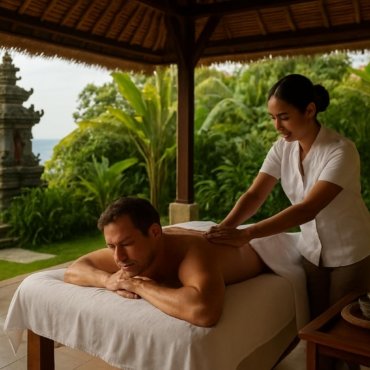
This is usually the largest section. It may include Balinese massage, relaxation massage, aromatherapy massage, deep-tissue-style massage, traditional techniques, back-and-shoulder massage, and foot massage or reflexology. Read the short description carefully: it should tell you more about the intended style than the name alone.
If you have never tried a Balinese massage, it is generally associated with a combination of flowing strokes, kneading, acupressure-like work and, in some settings, gentle stretching. However, techniques and pressure vary between spas and therapists. If you prefer a very gentle touch or a firmer massage, say so clearly rather than assuming the name guarantees a particular pressure level. For more context, see this first-timer’s guide to Balinese massage.
Body treatments
This section often includes body scrubs, body masks, wraps, or treatments that combine exfoliation and moisturising steps. These are frequently chosen by travellers who want a slower, more ritual-like spa experience rather than massage alone.
Check the sequence. For example, a menu may list a scrub and a massage together, but it is worth confirming the order and the time allocated to each stage. If you have sensitive skin, sun-exposed skin, or a known ingredient sensitivity, ask what products are used and whether the treatment is appropriate for you.
Facials and beauty treatments
Facial menus can use terms such as cleansing, hydrating, brightening, soothing or rejuvenating. These descriptions are often about the experience and intended cosmetic focus rather than a medical result. Ask about the products, treatment steps and suitability for your skin type if you are unsure.
A facial can be a pleasant option on a quiet afternoon, but avoid booking an unfamiliar exfoliating treatment immediately before a major event or long beach day if you do not know how your skin may react.
Foot treatments and reflexology
Foot massage and reflexology treatments are popular after walking around Seminyak, browsing Petitenget, spending time at Seminyak Beach, or travelling between Bali neighbourhoods. A menu may use the terms interchangeably, although the approach can differ. Foot massage generally focuses on soothing the feet and lower legs; reflexology may follow pressure-point concepts.
When comparing options, check whether the time is devoted only to the feet and lower legs or also includes a neck, shoulder or head massage. That small difference can make one menu option a better fit than another.
Spa packages
Packages combine two or more services into one longer booking. They can be convenient when you want a more complete spa visit, but they require closer reading than a single massage. A package may include a massage plus a body treatment, facial, foot treatment, bath, or another menu item. The name alone does not tell you exactly what happens.
When comparing packages, focus on the treatment sequence, total stated duration, and which individual services are included. It can also help to compare a package with booking the same types of services separately, especially if your group has different preferences. A spa package selection guide can be useful when the menu offers several combinations that appear similar at first glance.
Treatment names to understand before you book
Spa menu terms are not always standardised. The following descriptions are useful starting points, but the spa’s own menu and staff should be the final reference.
Balinese massage
A Balinese massage commonly refers to a traditional-inspired full-body massage using a mix of longer strokes, kneading and focused pressure. It is often selected by visitors who want a classic Bali spa experience. Pressure can usually be discussed, so let the therapist know if you prefer light, medium or firm pressure.
Aromatherapy massage
An aromatherapy massage generally combines massage with scented oils. It is often positioned as a calming option. If you are sensitive to fragrance, pregnant, have allergies, or simply prefer unscented products, mention this before the treatment begins and ask what alternatives may be available.
Deep tissue or strong-pressure massage
These terms usually indicate more focused, firmer work than a relaxation massage. They do not necessarily mean the same technique at every spa. Stronger is not automatically better: the right pressure should feel purposeful but tolerable, not like something you have to endure. Speak up during the session if you need an adjustment.
Traditional massage
“Traditional” can refer to local techniques or a massage style inspired by a particular regional practice. It is a broad term, so ask what the treatment involves if the menu description is brief. Useful questions include whether it includes stretching, whether oil is used, and how the pressure is normally delivered.
Relaxation massage
This usually signals a gentler, slower experience intended to help you unwind. It can be a sensible choice after a flight, on a rest day, or when you do not want particularly deep pressure. Still, do not assume “relaxation” means extremely light pressure; communicate your preference.
Scrub, mask and wrap
A scrub generally exfoliates the surface of the skin. A mask is a product applied to the body or face for a period of time. A wrap often means the product is left on while the body is covered or rested. Menus may combine these terms, so check how many separate steps are involved and whether a shower or rinse is part of the process.
How to compare durations and package wording
Duration is one of the most important details when choosing spa treatments in Bali. A menu may show several versions of the same massage with different time options, while packages may list one total duration for several services.
Shorter sessions
A shorter treatment can work well when you have limited time between breakfast and the beach, before dinner, or after a busy day of sightseeing. It is often best to choose a focused service, such as a back-and-shoulder massage or foot treatment, rather than trying to fit several treatment types into a short appointment.
Longer massage sessions
A longer massage gives more time for a full-body approach and a less rushed pace. It may suit travellers who want to settle into the experience after a flight or active day. If you are deciding between a 60-minute and 90-minute massage, consider your comfort with lying on the table, your preferred pressure, and whether you want attention spread across the whole body or more time on areas that feel tired.
A 60-versus-90-minute massage article can help you think through that choice in more detail. Neither duration is inherently better; the best option depends on your schedule, budget and how you want to feel afterwards.
What “total duration” may mean
For packages, the stated duration is often the total appointment time for all listed services. Do not assume that every individual treatment receives the same length of time as it would when booked separately. If the breakdown is not clear, ask how the time is divided.
This is particularly important for combinations such as massage plus scrub, massage plus facial, or foot treatment plus full-body massage. A clear answer helps prevent disappointment and lets you decide whether you would rather book one longer treatment or a multi-step package.
Allow time around the treatment
When planning your day in Bali, leave a little flexibility around your appointment. You may want time to arrive calmly, discuss preferences, change clothes, and avoid rushing immediately into traffic, a tour departure, or a restaurant reservation. This is especially useful in Seminyak, where travel times can vary during busy periods.
Questions to ask about inclusions and comfort
A good spa menu should answer many basics, but asking a few simple questions is completely normal. It is also the best way to avoid relying on assumptions.
- What exactly is included in this treatment or package?
- Is the duration for the massage itself or for the complete experience?
- What order are the treatments done in?
- Can I request light, medium or firm pressure?
- Are oils, scrubs or other products used, and can I mention allergies or sensitivities?
- What should I wear or bring for this treatment?
- Is the treatment suitable if I have recently had a lot of sun exposure?
- Can you recommend an option based on the time I have available?
If you are pregnant, have an injury, have recently had surgery, take medication that affects your skin or circulation, or have any health concern, seek appropriate medical advice and tell the spa before booking. A spa treatment is not a substitute for medical care, and it is always reasonable to choose a gentler option or postpone a session when you are unsure.
How to shortlist the right option for your Bali trip
A simple way to narrow down a long menu is to start with your situation, not the treatment names.
If you have just arrived in Bali
You may prefer a calming massage at a comfortable pressure rather than the strongest option on the menu. Hydrate, keep your schedule relaxed, and tell the therapist if you feel tired from travelling.
If you have been walking, swimming or sightseeing
A foot treatment, reflexology session, or massage that allows attention to your legs and shoulders may be more relevant than a facial or body ritual. Think about the areas that actually feel tired rather than choosing only by the package title.
If you want a classic Bali spa experience
Look for a clearly described Balinese massage or a package that explains its traditional-inspired elements. Ask about the pressure and whether oils or stretching are part of the treatment so you know what to expect.
If you have only an hour or so
Choose one priority: full-body relaxation, focused back-and-shoulder work, or foot care. A single well-matched treatment can feel more satisfying than a hurried combination.
If you are booking with a partner, friend or family member
Each person does not need to choose the same treatment. One traveller may want a gentle relaxation massage while another prefers foot massage or a longer session. Check the menu individually, then ask the spa what booking arrangements are available for your preferred time.
Choosing a treatment at BALI gift SPA in Seminyak
If you are staying in Seminyak or nearby Petitenget, BALI gift SPA is located at Jl. Lebak Sari 21, Badung, Seminyak, Bali 80361, Indonesia, and is open daily from 10:00 to 21:00. Before making a booking, review the current treatment menu and ask the team about the options that suit your available time, preferred pressure and any product sensitivities.
This is especially helpful if you are comparing a single massage with a longer spa package, deciding between massage durations, or looking for a focused foot treatment after a day around Seminyak Beach. Clear communication before the appointment helps the spa recommend an option based on your preferences rather than leaving you to guess from menu names alone.
Frequently asked questions about Bali spa menus
What is the difference between Balinese massage and relaxation massage?
Balinese massage commonly uses a blend of flowing strokes, kneading and focused pressure, while relaxation massage is usually described as gentler and slower. However, menu terminology is not identical everywhere, so ask the spa how each treatment is performed and request your preferred pressure.
Does a spa package include all treatments listed in its description?
It should, but always read the details and confirm if anything is unclear. Check the total duration, the treatment sequence and whether the menu lists every included step. Do not assume that similarly named packages at different spas include the same services.
Should I choose a 60-minute or 90-minute massage in Bali?
A 60-minute massage can be a practical choice when your schedule is tight. A 90-minute session may suit you if you want a slower full-body experience or more time on particular areas. Choose based on your comfort, schedule and preference—not simply because longer sounds better.
Can I ask for lighter or firmer pressure?
Yes. Tell the therapist your preference before the session and speak up if the pressure needs adjusting. Clear, polite feedback is normal and helps make the treatment more comfortable.
Is it okay to book a scrub after being in the Bali sun?
If your skin is sunburnt, irritated or unusually sensitive, it is sensible to avoid exfoliation and ask about gentler alternatives. Tell the spa about recent sun exposure and any skin sensitivities before choosing a body scrub or other exfoliating treatment.
A Bali spa menu is not a test of how many treatments you recognise. Read the description, check the duration and inclusions, communicate what you want, and choose the option that suits the day you are actually having. That approach makes booking a massage or spa treatment in Seminyak feel straightforward, relaxed and personal.

Add Comment